History
Rediscover Forgotten Worlds At Mleiha National Park
When you enter Mleiha National Park, you will experience diverse sights and insights about the way people lived here in the Paleolithic, Neolithic, Bronze, Iron, pre-Islamic, Islamic and modern ages. Here you can learn more about each period's history, social order, rituals, diet, pathologies, hardships, trade and commerce, and their influences on the design of pottery, art and jewelry.
Discover The
Ages
The Paleolithic Period
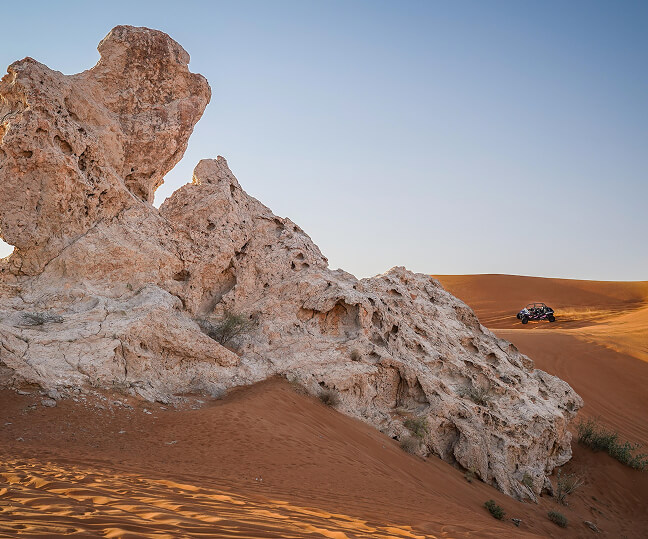
Spanning from around 2.5 million to 12,000 years ago, this era marks the invention of the first stone tools. While the earliest discoveries come from Africa, stone artefacts found in Mleiha National Park suggest early humans passed through Arabia en route to the Arabian Peninsula. The Jebel Faya site provides key evidence of settlement during the later Paleolithic stages.
The Neolithic Period
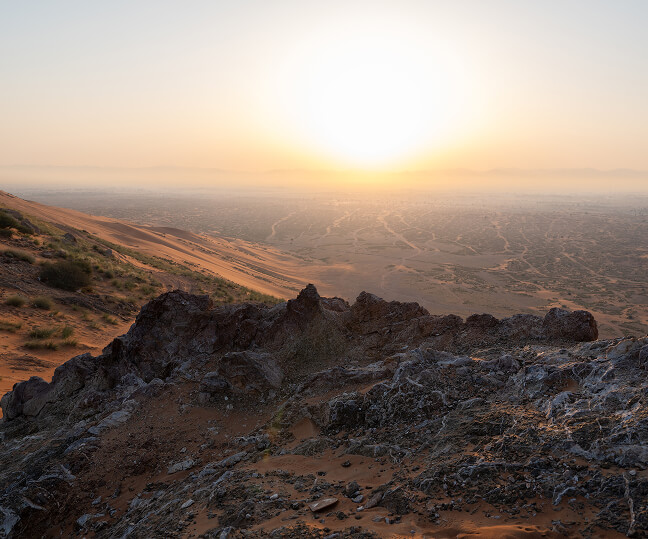
Dating to around 8000 BCE after the last Ice Age, Neolithic people settled in the Inland Basin, bringing livestock. They continued using flint and stone tools. Life in this era ended after 4000 BCE due to climate decline.Mleiha National Park's funeral sites reveal deep insights into burial customs of the time.
The Bronze Age
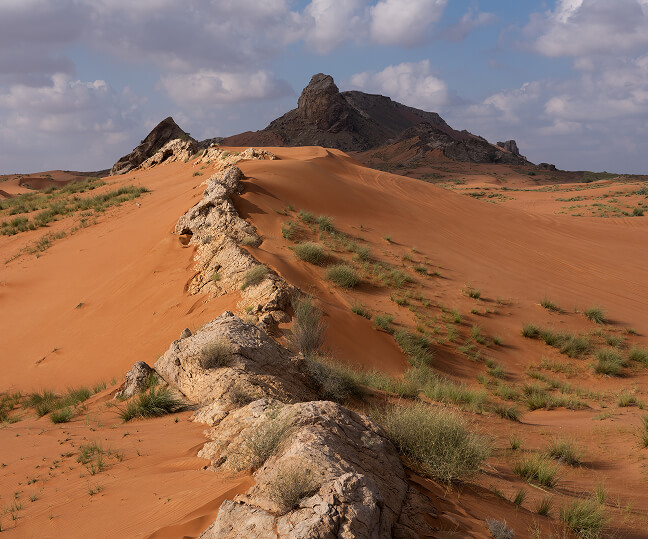
Beginning around 3000 BCE, this era saw the use of metals such as copper from the Hajar Mountains replacing stone for tools and weapons, marking the rise of long-distance trade. Excavations in Mleiha National Park's Inland Basin show strong Bronze Age activity supported by oasis-style farming. The period is divided into the Hafit, Umm an-Nar, Wadi Suq, and Late Bronze phases.
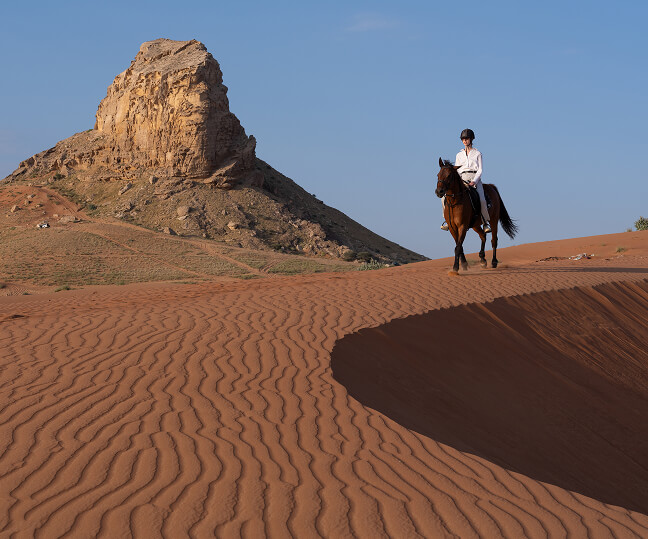
The Iron Age
Lasting from around 1200 to 400 BCE, the Iron Age is divided into three phases, with Iron Age II (1000-600 BCE) best represented in Mleiha National Park. Numerous graves and the settlement of al Thugeibah date to this period, known for its advanced water system of wells and a falaj. The settlement declined when groundwater became inaccessible.
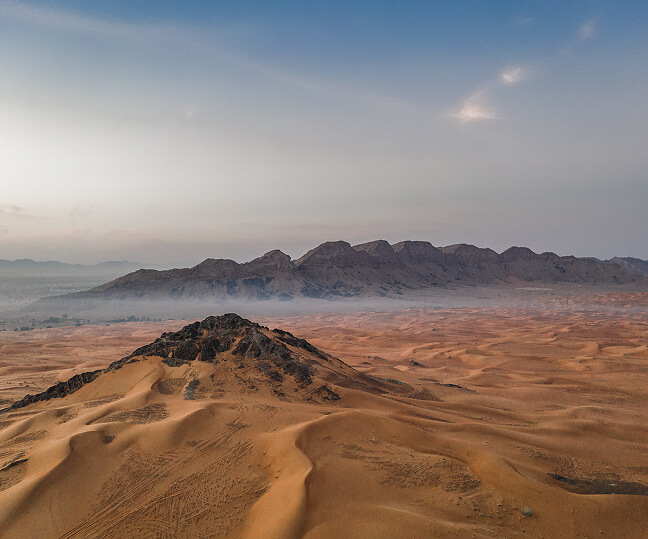
Late Pre-Islamic Period
Following the Iron Age in the 3rd and 4th centuries BCE, this period is well-documented at Mleiha National Park and Ed Dur. Discoveries reveal cultural development and external influence, ending with the emergence of Sassanian control in the region.