
UNESCO World Heritage Site
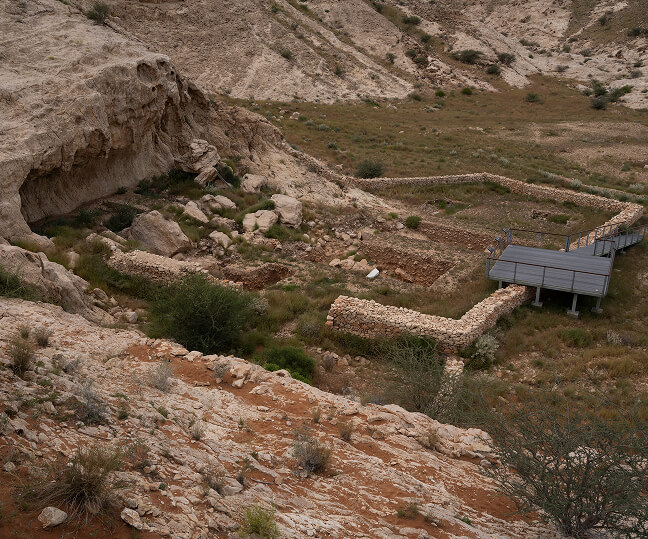
Early Stone Age and Neolithic Sites - Jebel Faya (FAY-NE1, 10, 15)
At Jebel Faya, several Stone Age sites reveal the earliest human presence in Arabia. FAY-NE1, dated to around 210,000 years ago, preserves tools made by early modern humans migrating out of Africa evidence that people crossed the Red Sea and settled here due to rich flint deposits. FAY-NE10, a small cave used between 7300 and 4700 BCE, contained cremated remains, flint tools, and bones of cattle and sheep the earliest proof of animal herding in Southeast Arabia. Nearby, FAY-NE15 (4800-4200 BCE) revealed Neolithic burials richly adorned with shell beads, pearls, and ivory ornaments, along with traces of palm trees and animal bones, showing a semi-settled community that thrived before the region became drier.
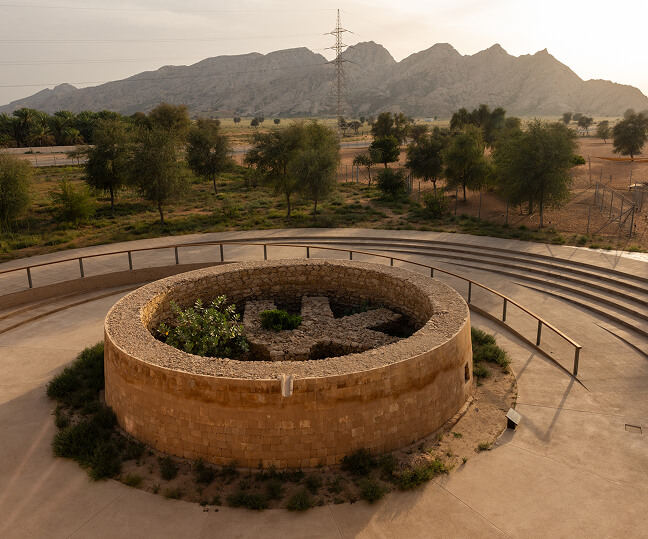
Bronze Age Tombs - Umm Al Nar and Jebel Faya (FAY-NE20-21-22)
By around 2300 BCE, Mleiha National Park's inhabitants built grand circular tombs characteristic of the Umm Al Nar culture. The largest, measuring over 14 metres wide, contained multiple chambers and burials accompanied by jewellery, tools, and weapons, reflecting trade links with Mesopotamia and the Gulf. Further east at Jebel Faya, three Bronze Age tombs (FAY-NE 20–21–22) date to the early second millennium BCE. Though looted over centuries, they yielded pottery, bronze weapons, beads, and architectural features typical of the Wadi Suq and Umm Al Nar phases offering rare insight into early settlement and burial traditions in the region.
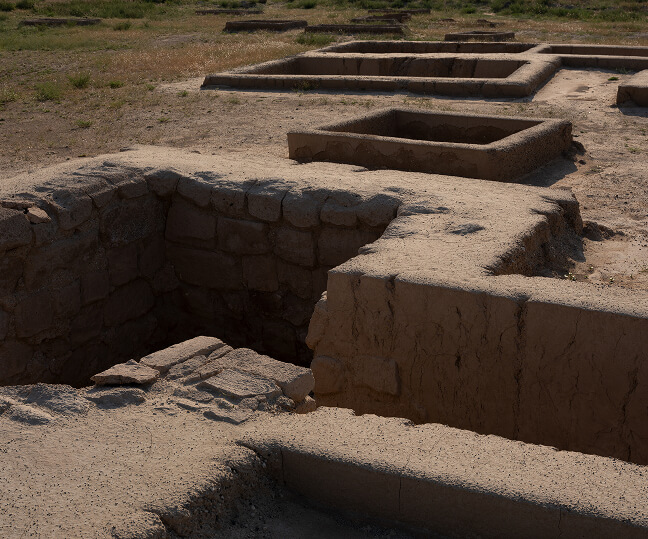
Pre-Islamic Settlement and Urban Life - Mleiha National Park Fort (MLH-CW)
Built between the mid-2nd and 3rd centuries CE, Mleiha National Park Fort served as a ruler's residence and administrative center. The mud-brick structure featured corner towers, a central courtyard, and workshops for metal, ivory, and rope production. Finds of glass vessels, coins and its mold, and luxury goods indicate wealth from long distance trade. The discovery of the “Horse with the Golden Disks” and hybrid camels in nearby graves highlights the importance of Mleiha National Park as a cultural and political hub before the Sassanian era.
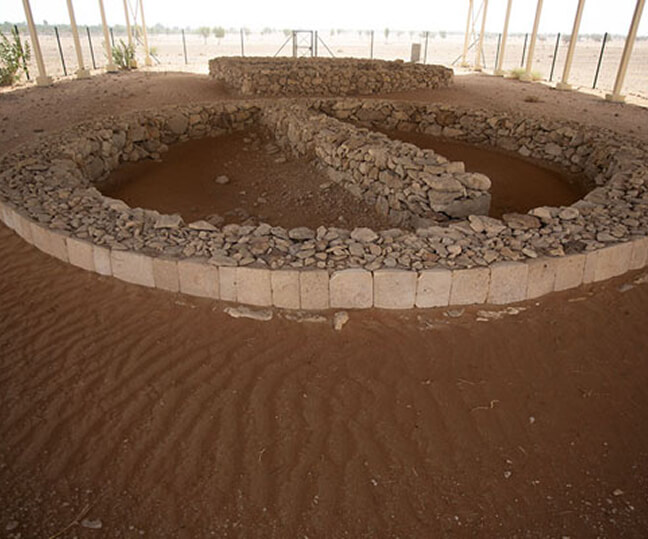
Residential Complexes and Everyday Life - MLH-4 and MLH-6
South-east of the fort, the MLH-4 complex contains five mud-brick residential units with kitchens, ovens, and infant burials adorned with jewelry dated to the 1st century CE. Nearby MLH-6, a 16-room structure with a central courtyard and stone seating circle, yielded pottery, grinding stones, and cooking installations. Together, these buildings reveal organized domestic life, food preparation, and craftsmanship within the expanding ancient city.
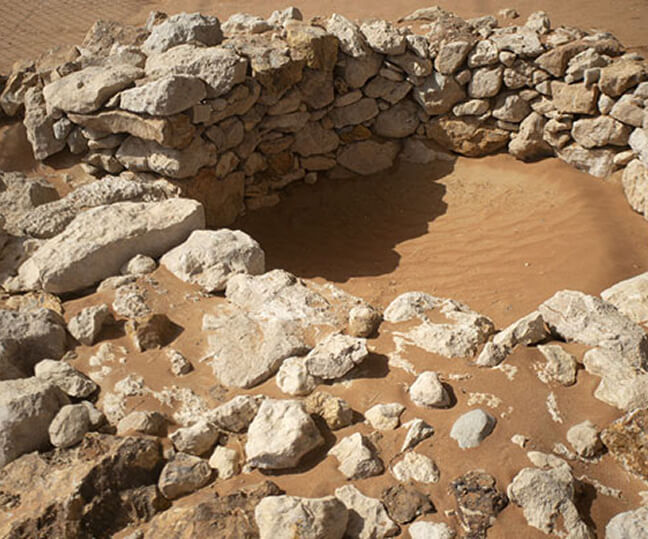
Burial Traditions and Status - MLH-5 Cemetery
South of the fort lies MLH-5, a vast cemetery used between the 2nd century BCE and 1st century CE. Graves were found, including monumental towers and simple pit tombs reflecting social hierarchy. Despite looting, discoveries of pottery, marble vessels, iron swords, jewelry, and bronze spouts shaped like horse and bull heads highlight the craftsmanship and ceremonial significance of death rituals in ancient Mleiha National Park.
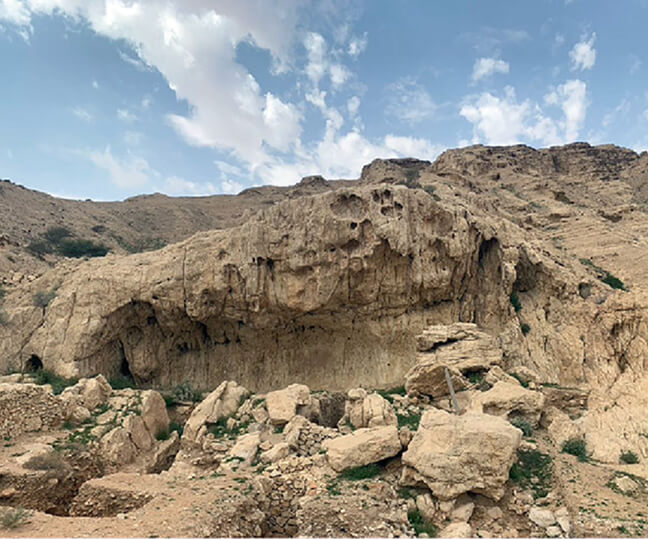
Palatial Expansion and Decline - MLH-8 "The Palace"
East of the fort, MLH-8 dates from the 1st to mid 3rd centuries CE and features a fortified palace surrounded by outer walls with towers. The inner courtyard contained storage and kitchen areas, while rich finds gold and bronze coins, ivory, glassware, and imported pottery point to prosperity and international trade links. Evidence of burning suggests the site was attacked and abandoned around the 3rd century CE, marking the decline of Mleiha National Park's urban prominence.